What I Love About Art Deco: The Aqueous Brand
Art Deco symbolizes the embrace of change and the dawn of a new age. The gilded cornices, the geometric patterns, the big marquis-style fonts, the avant-garde fashion, and the brilliant colors all symbolize an era of modernity replete with the expression of both femininity and masculinity. Art Deco is egalitarian and utopian.
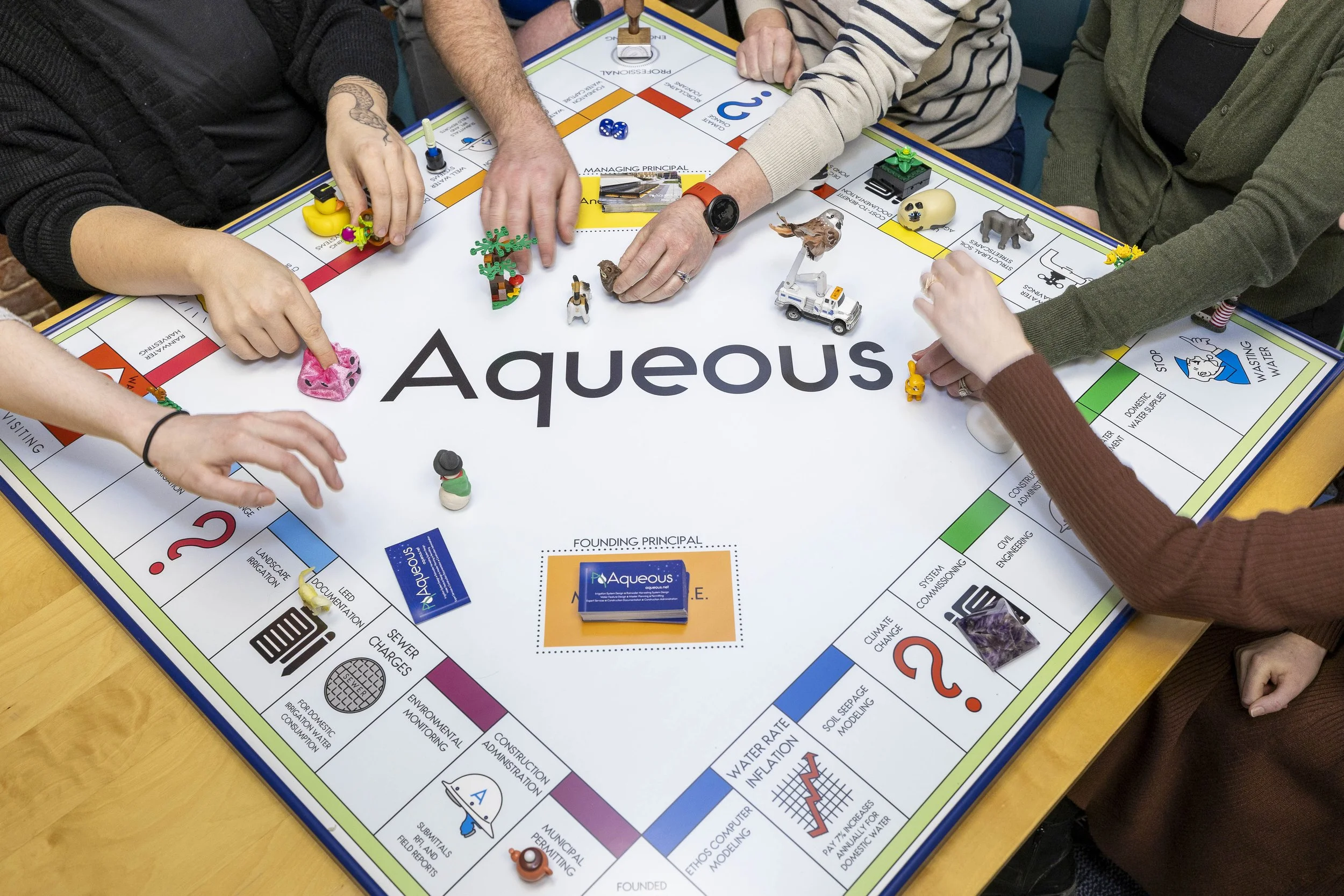
Custom Aqueous Monopoly Board by Michael Igo (Photo by A Priori Photography)
I have played the game Monopoly since I was 3 years old all the way through to today. It was invented and patented in 1904 by Elizabeth Magie Phillips but intellectually confiscated by Charles Darrow and Parker Brothers in the middle of the Art Deco period in 1935. One of my father’s clients in the 1980s was Parker Brothers in Salem, Massachusetts, so we always had a set growing up down the street in Peabody. I have always loved games of chance, skill, and persuasion, manifesting itself today as entrepreneurship. While Monopoly’s gameplay is timeless (and to some, takes forever) in providing lessons on asset management, negotiation, and using debt wisely, I think subconsciously, Monopoly’s Art Deco font, iconographic game pieces, rainbow-colored property cards, and bright red Bakelite dice became part of the way of what I think is harmonious and beautiful. It was my nerdy early childhood encapsulated in an art form.
Now as an engineer, I am drawn to Art Deco’s boldness, geometry, and symmetry. Distinct from all other forms and eras, the artists and artisans in this medium seem to make their dreams of the future tangible. Engineers help architects and planners in taking their ideas today into the physical future. But also, as a right-brained person, the colors, the blocky sans serif fonts, and architecture all point to choice, thoughtfulness, and elegance. Art Deco is art in all things and all ways. Oscar Wilde (1854 – 1900) said, ‘All Art is Quite Useless.’ It might be useless in its ability to produce objective physical work, production, or labor, but ‘Art’, as expressed through Art Deco, carries a sense of utility for industrious people of Western Civilization to find beauty in all things: furniture, buildings, clothing, and hairstyles. It is no surprise that Wilde’s gravestone is an early Art Deco ornate winged sphinx in the middle of Paris. The soul of Oscar Wilde may be the precursor to Art Deco in the mainstream.
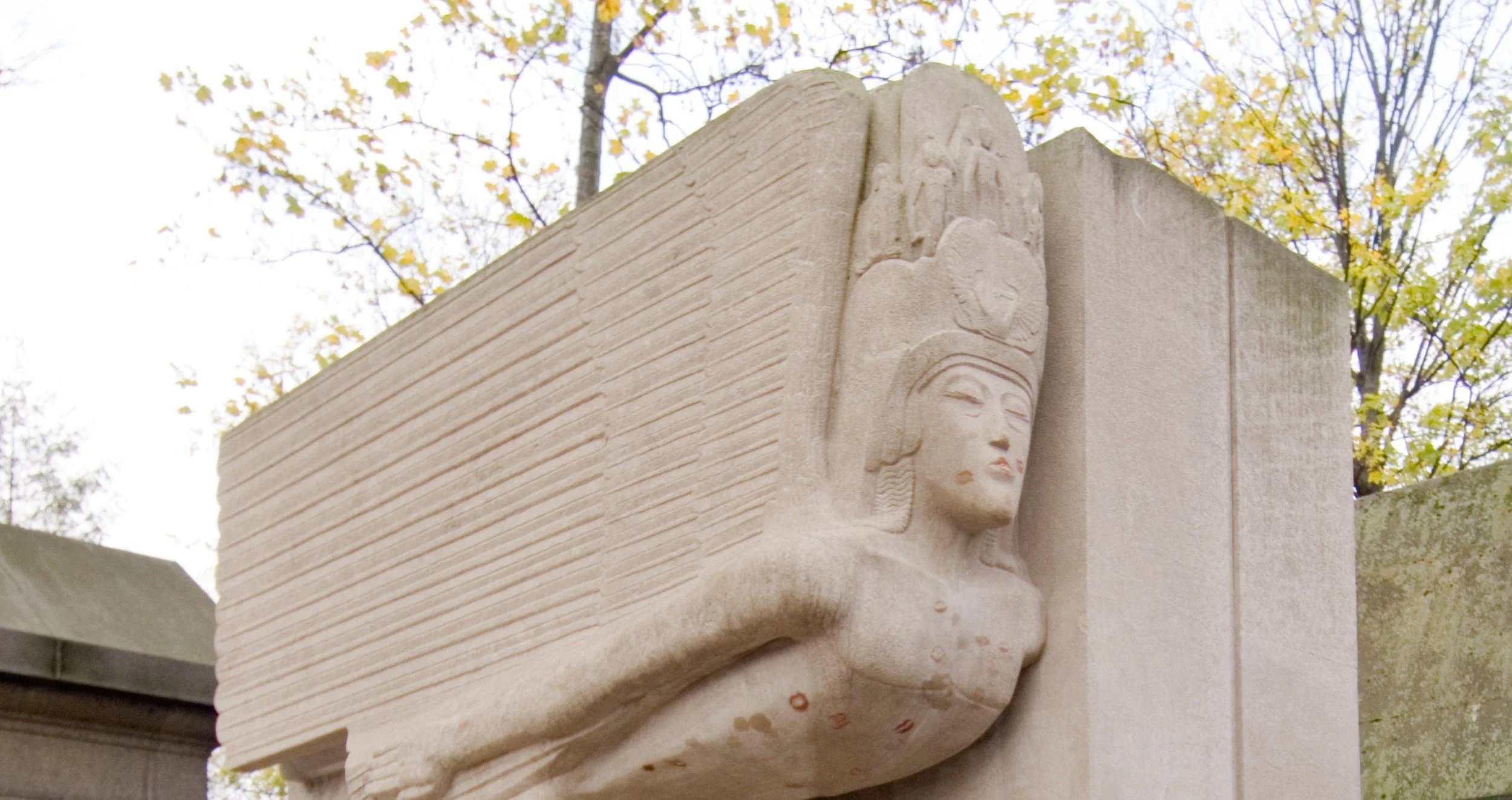
Tomb of Oscar Wilde (1854 - 1900) in Cimetière du Père-Lachaise, Paris, France (Photo by Vincent MacNamara, Licensed through Alamy)
Art Deco as a forefront trend may have passed, but it will always come back in different forms having left its impression throughout eternity. The artifacts, hieroglyphics, and monuments of Ancient Egypt could be considered the precursors and inspiration for Art Deco. Celebrating and honoring the feminine, while revering the masculine, the high points of Ancient Egyptian civilization were certainly egalitarian, if not utopian when the economic and climatic conditions were favorable. From depicting everyday life to adorning the Pharoah, the art, artifacts, and monuments of this era symbolize prosperity and hope through design. The pyramids and temples of that age are today’s Empire State Building, Chrysler Building, and Rockefeller Center. This epoch was literally and metaphorically, a gilded age with golden finishes, bejeweled with lapis lazuli, ornate writing, and a higher sense of purpose towards the future, even if that future was the eternal afterlife.
Art Deco was the first contemporary form of art to imbue itself in all things and not just sequestered as wall hangings or sculpture in a church, castle, or museum. It is not static, but rather dynamic. Even with paintings, there were no still life pieces, only energetic moments in action. Art Deco was life through the lens of the active and enlightened bougie urban Westerners. And to the creators and lovers of that lifestyle, there was nothing to be ashamed of for embracing it. Art Deco was never to the extent of hedonism, it was often provocative, but always right to the line tethered to elegance. Nothing demonstrates this more than the artwork of Tamara de Lempicka.
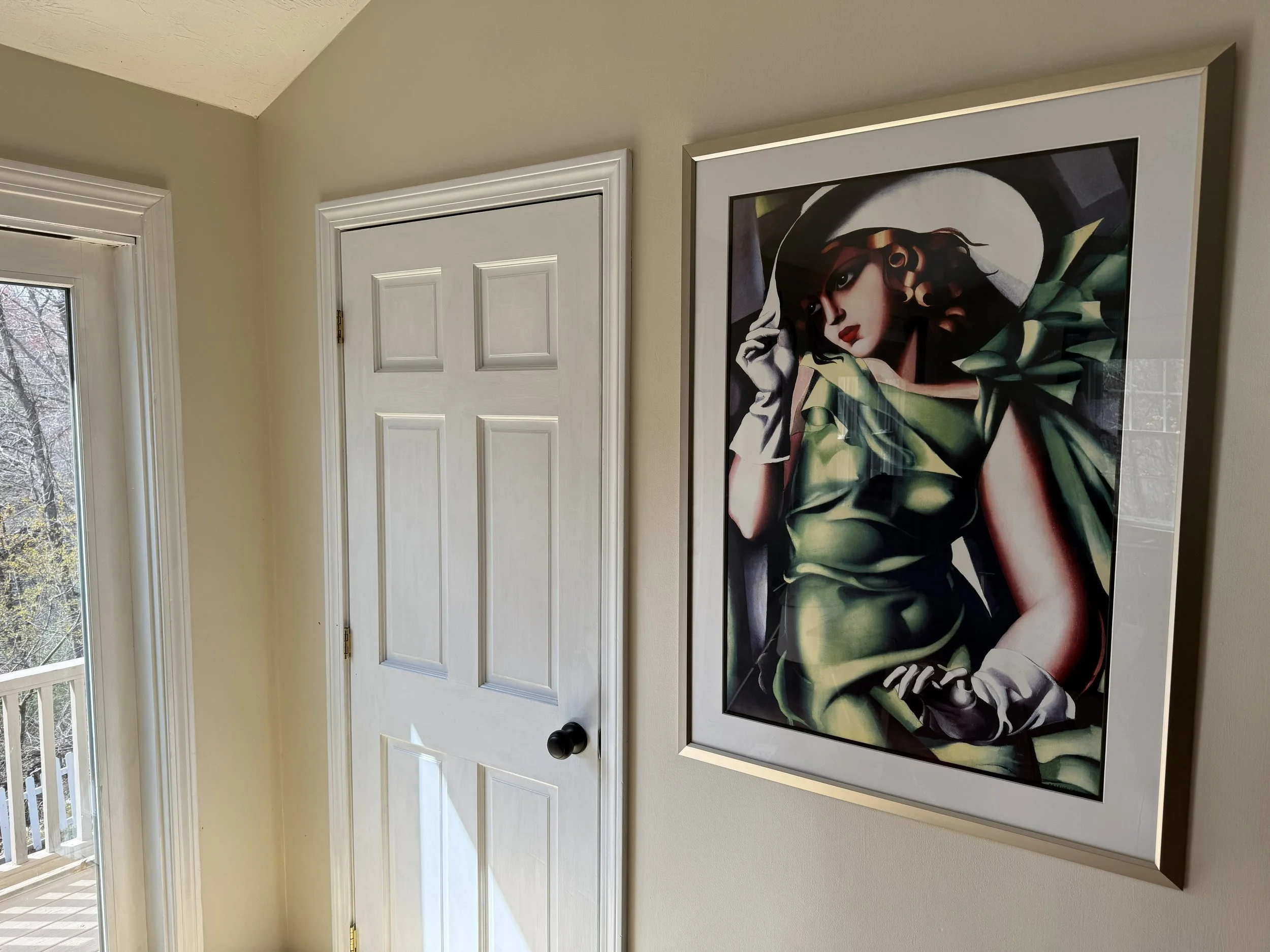
The Young Woman in the Green Dress, by Tamara de Lempicka (ca. 1931) in Mike and Andrea’s House (photo by Michael Igo)
Well before I started Aqueous, Andrea and I went to the Museum of Fine Arts in Boston while in graduate school together, and I was drawn to Lempicka’s style, choice of subjects, primary colors, and abstraction of the human form. In many ways, all her human subjects were “super humans”, both women and men. Soon after, I bought a sharp aluminum-framed print of The Young Woman in the Green Dress, and it has hung in our apartment, house, and office for stretches of time over the last 20 years. When I look at the painting, I harken back to a time when we were young and in love (now old and in love), innocent in the ways of career, life, children, and what lie ahead with suburban corporate life. The spirit of Art Deco never extinguished in me: the pedantic nature of the proletariat life I was “supposed” to live pressured me to create Aqueous and a life of growth with limitless possibilities as an owner of a consulting design firm. In fewer words, a future.
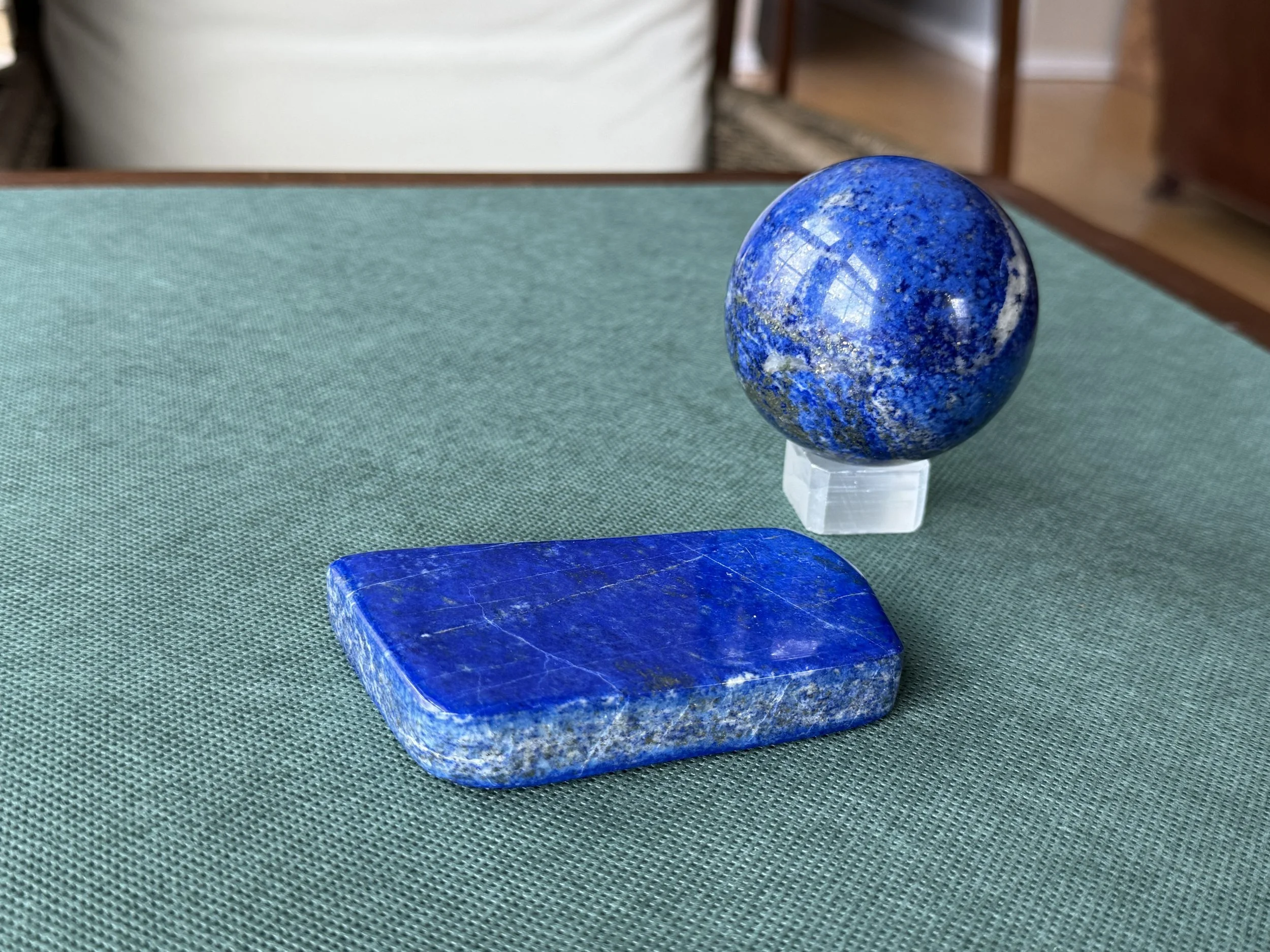
Lapis Lazuli from Mike’s Desk (Flat Piece Purchased at the Museum of Science, Boston, MA; Sphere From The Miner’s Pick Rock Shop, Jerome, AZ (photo by Michael Igo)
Art Deco is throughout Aqueous’ brand. Ultramarine (Aqueous’ Blue) is in the Art Deco palette having an aura of peace, knowledge, and understanding. It is power, but of the mind, not of the body or of weaponry. It is the same color as lapis lazuli adorned by the Pharaohs and the gem was crushed to create a dye of that color. Bambino font (Aqueous’ Font) is a nod to the era of Art Deco. As a derivative of the Futura font family, it is nearly identical to the Monopoly font I had grown attached to, so much so, that I created my own Aqueous Monopoly board in a nerdy arts and crafts project during Covid. Bold, dynamic, and futuristic, Bambino underscores modernity and creativity apart from the corporate script while still providing a crisp and legible sans serif font for reports and engineering plans.
Aqueous is Art Deco if it were an engineering firm: design-based, egalitarian, and forward-thinking. Its branding is a reflection of my values, what I hold dear, and my interpretation of art, design, and the future. As Oscar Wilde also said, ‘It is the spectator, and not life, that art really mirrors.’
Aqueous Logo since 2016 (by Michael Igo)
No content in this blog article was created by artificial intelligence